
From Regular Shaving to Long-Term Hair Reduction: A 10-Session Underarm Case on the Zemits Quidion Lite Pro
10 sessions — and the hair in the underarm area is barely noticeable, while shaving is no longer part of the client's regular routine.

The client came in requesting laser hair removal due to the frequent need to shave the underarm area.
Tetiana Vasyliuk built a 10-session course with parameters individually selected for Fitzpatrick Skin Type II.
Tetiana Vasyliuk, Laser Hair Removal Specialist
Tetiana Vasyliuk is a laser hair removal specialist with over 5 years of experience, founder of Laser Time studio in Ukraine and Austin, Texas, and a laser hair removal instructor.
Her approach is built on selecting parameters individually, based on skin type, hair structure, and each client's characteristics.

Client Profile & Course Parameters
- Client: Female, 29 years old
- Area: underarms
- Concern: frequent shaving
- Fitzpatrick: II
- Course: 10 sessions
- Intervals: 4–10 weeks
- Frequency: 3 Hz
- Pulse duration: medium
- Power: above average
- Follow-Up Sessions: every 9–12 months
- Device: Zemits Quidion Lite Pro, 808 nm diode laser
Shaving vs. Diode Laser: What Happens to the Hair
Shaving and laser hair reduction work with hair on different levels
Shaving: The Hair Is Cut at the Surface

A razor cuts the hair shaft — the part of the hair located above the skin's surface. The follicular structures beneath the skin remain functional, so hair growth continues.
That's why shaving has to be repeated.
At the same time, shaving does not make hair thicker or darker, and does not speed up its growth. After cutting, the hair simply has a blunter edge, so as it grows back it can feel coarser to the touch.
808 nm Diode Laser: Light Works
Through Melanin
In laser hair reduction, the key chromophore is melanin.
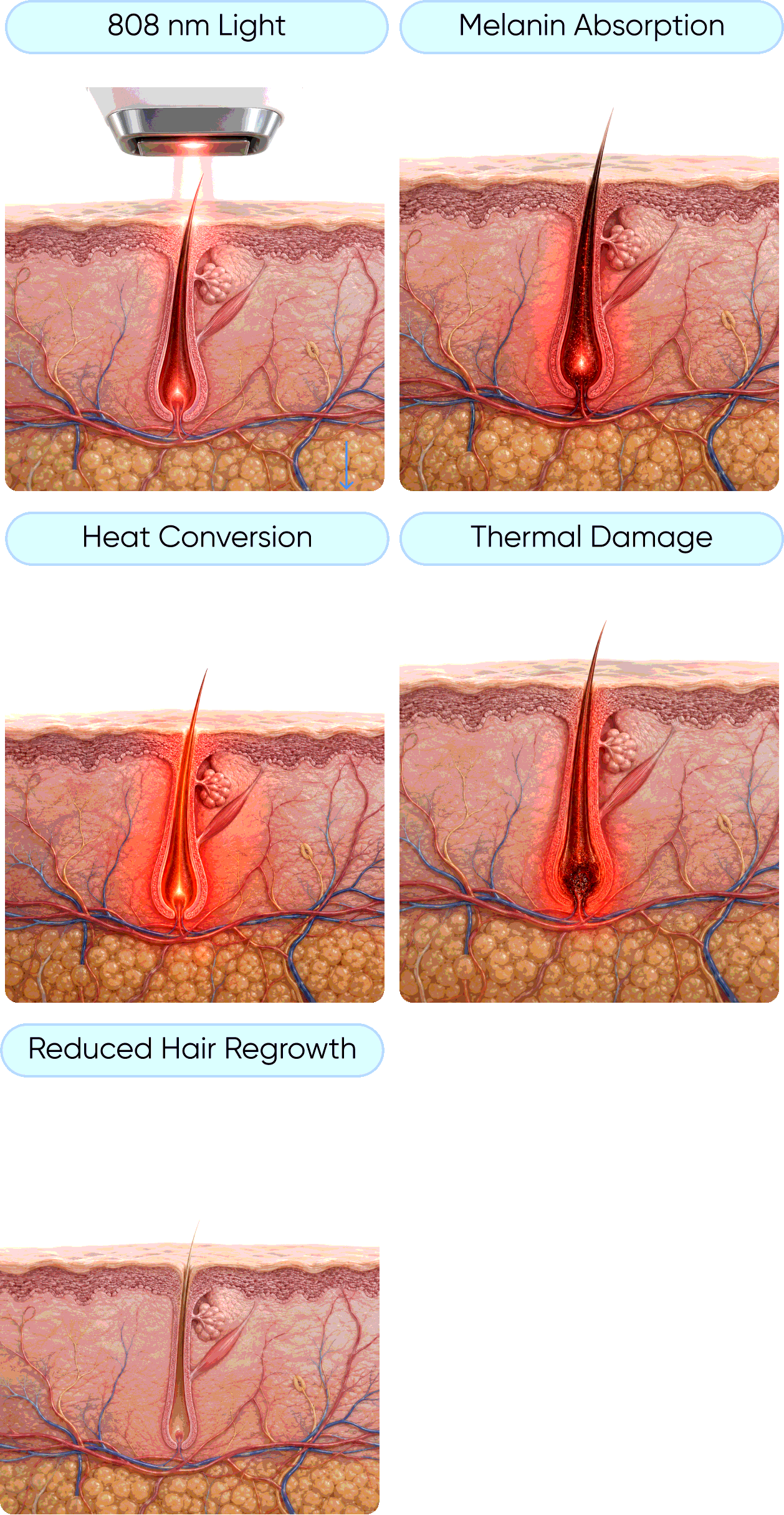
The Quidion Lite Pro delivers controlled 808 nm diode laser energy. The light energy is absorbed by the melanin in pigmented hair structures and converted into heat.
This principle is known as selective photothermolysis:
808 nm light → absorption by melanin → conversion to heat → thermal effect in follicular structures → gradual reduction in hair regrowth
In other words, the diode laser no longer works only with the part of the hair we see above the skin's surface. The thermal effect reaches the associated follicular structures involved in hair formation and regrowth.

Why a Course Is Needed
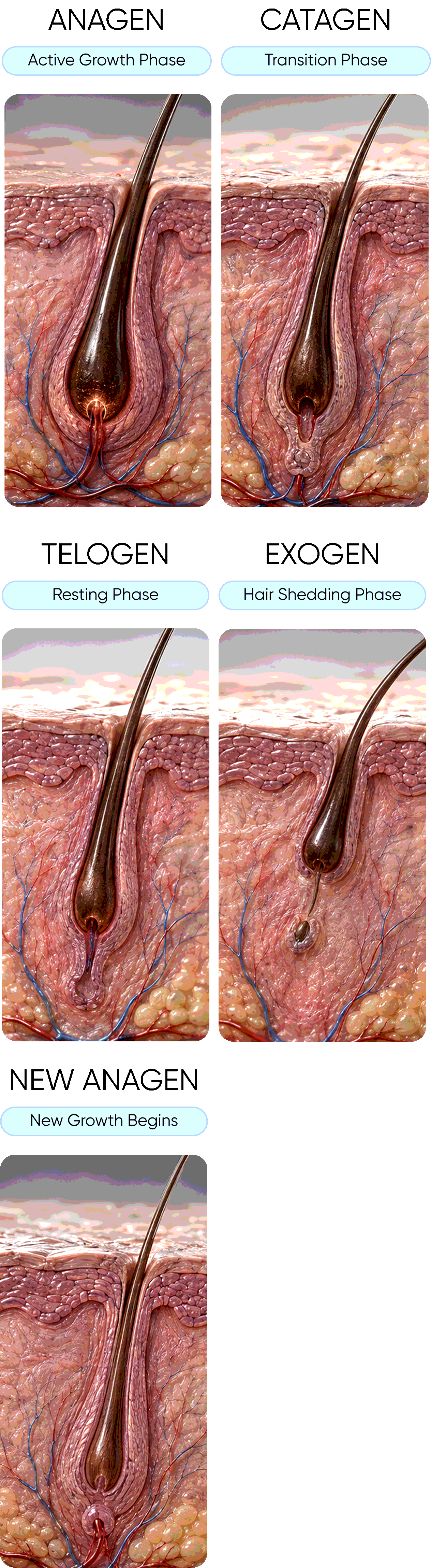
Hair within a single treatment area is at different phases of the growth cycle at the same time.
The most favorable phase for laser hair reduction is the anagen phase, when the hair is actively growing and has a functional connection to the follicular structures.
That's why professional laser hair reduction is built as a series of sessions with intervals: each subsequent treatment works with the portion of hair that is in the appropriate growth phase at that time.
In this case, the course consisted of 10 sessions at 4–10 week intervals.
HAIR GROWTH CYCLE

How This Physics Is Implemented in the Zemits Quidion Lite Pro

The 808 nm wavelength defines the optical interaction with melanin, but professional treatment also depends on how the energy is delivered.
The Quidion Lite Pro gives the licensed professional control over the key treatment parameters:
Energy
Determines the amount of laser energy delivered to the treatment area.

Pulse Duration
Determines how long that energy is transferred.

Frequency
Determines the rate at which consecutive laser pulses are delivered.

Cooling
Helps control the temperature conditions during laser delivery.
This case used 3 Hz, a medium pulse duration, and above-average power — parameters the specialist selected specifically for this client.
What
Changed After
10 Sessions
- hair in the underarm area is barely noticeable;
- shaving is no longer needed;
- follow-up sessions are recommended every 9–12 months
How the Zemits Quidion Lite Pro Supported the Result of This Course
808 nm Diode Laser The gold standard of professional laser hair reduction
QDC Technology Zemits' proprietary technology for stable, controlled laser delivery
3 Interchangeable Tips Precise work on the face, body, and hard-to-reach areas
Multi-Layer Cooling Four cooling mechanisms for comfort and temperature control
Adjustable Parameters Energy, pulse duration, frequency, and cooling — tailored to the individual client
Compact Professional System A complete diode laser workflow without unnecessary bulk
 Explore the Zemits Quidion Lite Pro for Professional Laser Hair Reduction


